Opera plans continued support for classic extensions in the browser
Opera Software released Opera One R2 this week. The new stable version of Opera comes with a large number of new features and changes.
This includes the new dynamic themes feature, tab splitting and recent tab highlighting, more AI functionality, and something that is easily overlooked in the long post on the Opera Software website: continued support for Manifest V2 extensions.
Here is what Opera says about extensions support: " In addition to that, Opera R2 will continue supporting Manifest V2 extensions, allowing you to continue using your favorite ad blocking and privacy-enhancing extensions just like before".
The post links to another one on the Opera website that provides additional details.
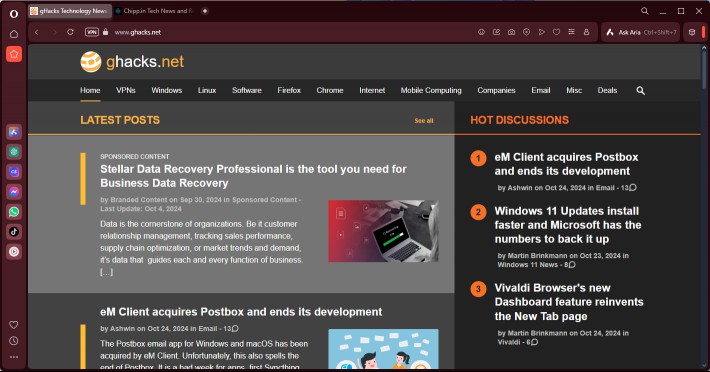
Opera plans to support Manifest V2 extensions independently of the development of Chromium, the source of Google Chrome and other browsers.
This means, that Opera users may continue to run and install Manifest V2 extensions, like uBlock Origin, in the web browser.
Now, the post is not very clear on the details. Opera Software mentions that it plans to contact extension developers to "determine the best and safest way forward".
Continued support would be remarkable at this point, as Google will remove code from Chromium next year. Up until then, policies exist to keep on using Manifest V2 extensions in Chromium-based browsers.
The removal of support of Manifest V2 has already started in Google Chrome for users who have not set the policies.
Up until now, only Brave Software announced that its browser, Brave, would support a few Manifest V2 extensions going forward.
Opera's commitment to all Manifest V2 extensions, if it is feasible for the company, ensures that users can continue using their favorite extensions and new Manifest V3 extensions. This would work similarly to Firefox, which also supports both Manifest V2 and V3 extensions.
Opera Software has one advantage over Brave Software and most Chromium-based browser makers (with the exception of Microsoft and Google). It operates its own extension store. While Opera users may also download and install extensions from the Chrome Web Store, users may also download and install extensions from the company's own store.
Brave Software does not operate its own store, which is probably the main reason why it decided to support only a few extensions. Google will remove Manifest V2 extensions from its web store next year when the policy option runs out.
Closing Words
Two Chromium-based browsers will continue to support Manifest V2 extensions by mid-2025 at the time of writing. That's Brave, which supports only a few, and Opera, which plans to support all of them.
It remains to be seen how this will work out and if other browser makers are also jumping on the bandwagon that separates them from main Chromium in a key aspect.
Have you tried Opera recently? What is your take on the company's plan to continue supporting Manifest V2 extensions after Google's deadline in mid 2025? Feel free to leave a comment down below.
RECOMMENDED NEWS

The 10 best hidden Google Games that you can play in your browser
Google is known for a lot of things: search, advertisement, AI, Android, security and more. The com...

Breaking: Mozilla has a new CEO
Mozilla has a new CEO. The announcement on Mozilla's official web blog confirms that Mitchell Baker...

VMware Workstation Pro 17 and Fusion Pro 13 are now free for personal use
Broadcom has announced that it is making its desktop hypervisor products free for home users. VMwar...

Speed Up Your Videos: YouTube Tests Playback Adjustment Up to 4x for Premium Subscribers
YouTube has announced new features exclusively for its Premium subscribers, enhancing the already r...
Google Photos Offers Free Replacement of Prints Lost in Los Angeles Fires
In response to the recent fires in Los Angeles, Google Photos is offering free replacements for can...
Firefox 138.0.1 arrives days after the last update to address two issues
Mozilla released Firefox 138 a few days ago to the public. The release features the new profile man...
Comments on "Opera plans continued support for classic extensions in the browser" :